
Phone cases used to have a fairly simple job: protect a phone from drops, scratches, and everyday wear. Shoppers compared color, grip, thickness, material, and price, then chose the case that matched their phone and personal style.
That buying decision is changing.
A modern phone case can now affect how a device works with wireless chargers, magnetic car mounts, wallets, kickstands, battery packs, desktop docks, and other everyday accessories. Protection still matters, but it is no longer the only reason consumers upgrade their cases.
That is why the Qi2 phone case is becoming an important topic for accessory brands in 2026.
Qi2 is not just another wireless charging update. By bringing magnetic alignment into a broader industry standard, Qi2 is helping magnetic phone accessories move beyond the iPhone-centered MagSafe market. As more devices and accessories support Qi2 or Qi2 Ready experiences, magnetic cases may become one of the most important entry points into the next stage of the smartphone accessory ecosystem.
For phone case brands, DTC accessory companies, Amazon sellers, Shopify brands, wholesalers, and retail buyers looking for a reliable phone case manufacturer, this shift creates more than a new feature. It opens the door to higher-value cases, bundled accessories, stronger product differentiation, and new opportunities in both iPhone and Android markets.
What Is Qi2 and Why Does It Matter for Phone Cases?
Qi2 is the latest generation of the Qi wireless charging standard developed by the Wireless Power Consortium.
One of its most important upgrades is magnetic alignment. Instead of placing a phone loosely on a wireless charging pad and hoping the coils line up correctly, Qi2 uses magnetic attachment to help the phone and charger align more accurately.
That may sound like a small improvement, but it solves several real problems with traditional wireless charging.
When alignment is poor, charging may become slower, unstable, or inconsistent. The user may need to adjust the phone several times before charging starts properly. With magnetic alignment, the phone can snap into a better charging position, making the experience easier and more reliable.
The original Qi2 standard supports faster 15W charging for certified devices, while Qi2 25W builds on that foundation with nearly 70% more charging power. According to the Wireless Power Consortium, Qi2 25W can charge a smartphone battery from 0 to 50% in about 30 minutes under suitable conditions.
For the phone case market, the bigger point is not only speed. Qi2 makes magnetic alignment a more standardized experience. That gives brands a stronger foundation for developing phone cases, chargers, mounts, wallets, stands, and power banks that work together more predictably.
In other words, the Qi2 phone case is not just about charging. It is about how the phone connects with the accessories around it.

From MagSafe to Qi2: Magnetic Charging Is Moving Beyond iPhone
For the past few years, most consumers have understood magnetic phone accessories through Apple’s MagSafe ecosystem.
MagSafe made the “snap-on” experience familiar. Consumers learned that a magnetic connection could attach a charger, wallet, power bank, car mount, or kickstand in a simple and intuitive way.
This matters because MagSafe already completed a large part of consumer education. The market no longer needs to explain why magnetic accessories are useful. Many shoppers already understand the convenience.
Qi2 now has the potential to bring that behavior into a wider smartphone market.
The Android side is especially important. Google’s Pixel 10 series supports the magnetic Qi2 standard through its Pixelsnap magnetic accessories, including magnetic chargers, stands, and compatible accessories.
Samsung has taken a different but equally important route. Samsung’s official magnetic wireless charger guidance notes that Galaxy phones should use a Qi2-ready case for magnetic alignment, and that magnetic alignment works with the Galaxy S25 Series or later.
These two approaches show why magnetic phone cases are becoming more relevant.
Some phones may include magnets directly inside the device. Others may rely on a compatible case to create the magnetic alignment experience. Either way, the result is clear: magnetic charging and magnetic accessories are no longer limited to iPhone users.
For brands targeting Samsung, Google Pixel, and other Android users, the Android magnetic case category may become one of the most important product opportunities created by Qi2.
Why Qi2 Phone Cases Matter More in the Magnetic Accessory Era
The rise of Qi2 does not make the phone case less important. In many situations, it makes the case more valuable.

The case may carry the magnetic function
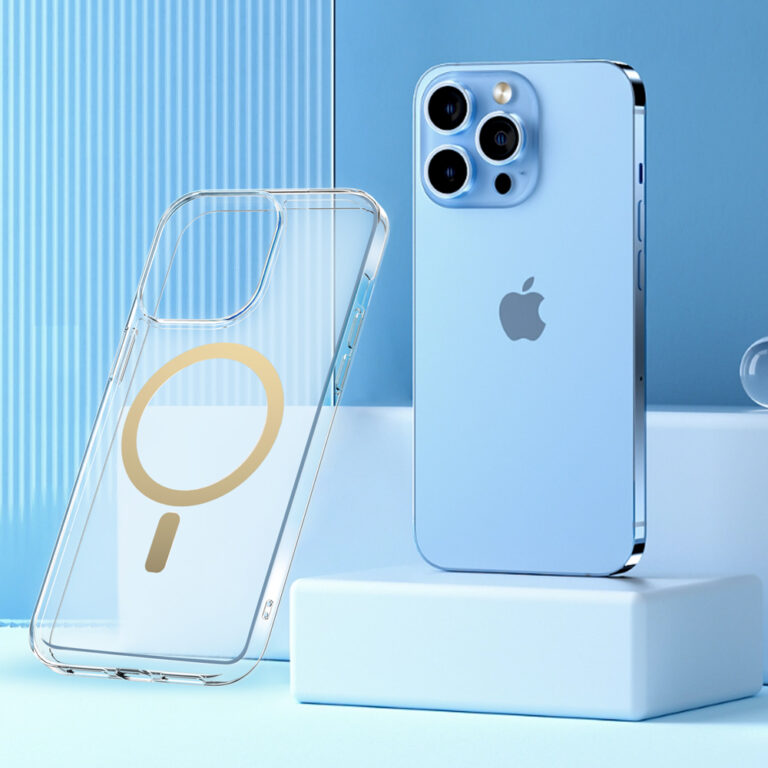
Not every smartphone needs to include built-in magnets. In some cases, the phone case may provide the magnetic ring or alignment structure required for the device to work better with Qi2-compatible accessories.
This gives the case a new role.
It is no longer just a protective shell around the phone. It may become the part that enables the magnetic experience.
That is especially important for Android devices. A well-designed Android magnetic case may help users connect their phones with wireless chargers, car mounts, wallets, stands, and power banks that would otherwise be harder to use.
For brands, this creates a new reason to develop magnetic cases as a dedicated product category rather than a simple variation of a standard case.
Case design affects charging performance
Adding magnets to a phone case is not enough.
The magnetic ring position, back panel thickness, case material, decoration layer, and distance between the phone and charger can all affect the real-world charging experience.
If the magnetic ring is not aligned correctly, the case may attach weakly or charge inconsistently. If the back panel is too thick, wireless charging may become less efficient. If the material around the charging area is not carefully selected, the product may look good but perform poorly.
This is why a Qi2 Ready case requires more than appearance design. It requires structural design, material evaluation, magnetic alignment, and wireless charging testing.
The case connects multiple accessory categories
A magnetic case can connect a consumer to an entire accessory ecosystem.
One magnetic phone case may support:
- Wireless chargers
- Magnetic car mounts
- Magnetic wallets
- Magnetic kickstands
- Magnetic power banks
- Desk stands
- Charging docks
- Tripod mounts
- Travel charging accessories
This makes the phone case a strategic product. A customer may buy the case first, then purchase several compatible accessories later.
For brands, that means the business opportunity is not limited to one case sale. Magnetic cases can support product bundles, add-on sales, and stronger customer retention.
Compatibility becomes a selling point
Consumers are starting to ask different questions when buying phone cases.
They still care about protection, color, grip, and drop resistance. But more shoppers also want to know:
- Does this case support Qi2 charging?
- Is it compatible with MagSafe-style accessories?
- Will it work with a magnetic car mount?
- Can I use it with a magnetic wallet or power bank?
- Will wireless charging still work with the case installed?
This changes the product page, packaging, and retail display strategy.
Compatibility is becoming part of the value proposition.
What Qi2 Means for the Magnetic Phone Case Market
The phone case market does not need smartphone unit sales to grow rapidly every year in order to create new opportunities.
Growth can also come from higher product value, stronger functionality, and a more complete accessory ecosystem.
Grand View Research estimates that the global mobile phone protective covers market will reach about USD 53.33 billion by 2033, expanding at a CAGR of 8.6% from 2025 to 2033.
Several market factors support the rise of magnetic cases.
First, smartphones are expensive. Consumers want to protect devices they may use for several years.
Second, phone replacement cycles are longer than before in many markets. If consumers keep their phones longer, they may be more willing to buy cases that provide better protection and more functionality.
Third, accessories are becoming more connected. A basic case protects the phone. A wireless charging phone case can protect the phone while also supporting charging, driving, travel, work, video viewing, and mobile productivity.
That functional difference gives magnetic cases more pricing power than ordinary low-cost protective cases.
For brands, this matters. It is difficult to build a strong product story around another basic transparent case. But a magnetic case collection can offer a clearer reason to purchase, upgrade, bundle, and cross-sell.
Opportunities for Phone Case Brands
Qi2 gives accessory brands several ways to rethink their product strategy.

Build a dedicated magnetic case product line
Magnetic compatibility should not always be treated as a small add-on to an existing case.
Brands can build a dedicated product line around magnetic use cases, starting from a practical magnetic phone case category and expanding into bundled accessories.
A full magnetic product line may include:
- MagSafe compatible cases for iPhone
- Qi2 Ready cases for selected Android phones
- Slim magnetic cases
- Magnetic rugged cases
- Magnetic wallet cases
- Magnetic kickstand cases
- Magnetic leather or vegan leather cases
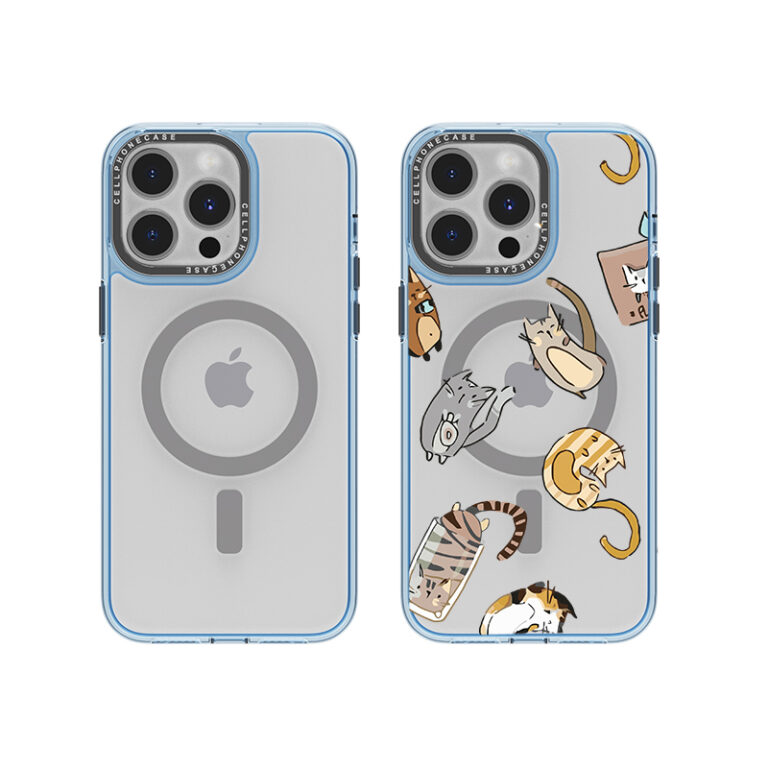
- Magnetic cases with IML or IMD decorative back panels
A complete product line gives shoppers more choices and gives the brand more room to build a clear category identity.
For DTC brands, Amazon sellers, and retail buyers, developing a magnetic case line early can create a stronger product moat before the category becomes fully saturated.
Prepare for Android magnetic case demand
The Android case market is more complex than the iPhone case market. There are more brands, more models, more camera layouts, and more regional device variations.
Qi2 does not remove that complexity, but it can create a more recognizable functional category across Android devices.
As Google, Samsung, and other Android brands continue moving toward Qi2 or Qi2 Ready experiences, the Android magnetic case may become a stronger growth category for accessory sellers.
This is especially relevant for brands that already sell iPhone MagSafe compatible cases and want to expand into Android accessories with a more premium product angle.
Use magnetic compatibility as a retail selling point
Magnetic compatibility should be communicated clearly on product pages, packaging, Amazon listings, Shopify pages, and retail displays.
Useful product messaging may include:
- Supports magnetic wireless charging
- Compatible with magnetic accessories
- Works with magnetic car mounts
- Strong magnetic alignment
- Wireless charging friendly
- Designed for compatible Qi2 accessories
However, brands should avoid vague claims. Compatibility should be tested by phone model and accessory type whenever possible.
A strong product page should explain what the case supports, what accessories it works with, and whether the device itself requires a Qi2 Ready case for magnetic alignment.
Create bundled accessory opportunities
A magnetic case can become the center of a larger product bundle.
Brands can create combinations such as:
- Magnetic case + wallet
- Magnetic case + car mount
- Magnetic case + kickstand
- Magnetic case + wireless charger
- Magnetic case + screen protector
- Magnetic case + retail packaging
- Magnetic travel kit with charger and power bank
These bundles can increase average order value and make the magnetic ecosystem easier for customers to understand.
For wholesalers and retailers, bundles also make shelf presentation stronger. Instead of selling one case, the brand can sell a complete mobile accessory solution.
Key Design Challenges for Magnetic Phone Cases
A high-quality magnetic case is not simply a standard phone case with a magnetic ring added to the back.
The product must balance magnetic performance, charging behavior, protection, materials, appearance, hand feel, and accessory compatibility.
Magnet alignment
The magnetic ring must be accurately positioned in relation to the phone’s charging coil.
Even a small alignment issue can affect attachment strength, charging stability, and user experience.
This is why magnet placement should be verified during product development, sampling, and mass production inspection.
Case thickness
Case thickness is always a tradeoff.
A thicker case may provide better impact protection, but too much distance between the phone and charger can affect wireless charging performance.
A thinner case may improve charging alignment but may not provide enough drop protection for certain customer groups.
The best structure depends on the product positioning. A slim lifestyle case, rugged outdoor case, leather business case, and kickstand case should not all use the same design logic.
Material selection
Material choice affects both product performance and brand positioning.
Common materials include TPU, PC, TPU + PC hybrid structures, silicone, vegan leather, leather-texture materials, recycled materials, and IML / IMD decorative back panels.
Each material affects durability, grip, rigidity, weight, finish, production process, and perceived value.
For magnetic products, material selection also needs to consider wireless charging performance and magnetic accessory compatibility. That is why phone case manufacturing for magnetic cases requires more careful testing than ordinary protective cases.
Drop protection
Magnetic functionality cannot replace basic protection.
A successful magnetic case still needs:
- Corner protection
- Shock absorption
- Raised screen edges
- Raised camera lip
- Stable grip
- Accurate button response
- Reliable device fitting
A case that charges well but fails during a drop is not a successful product.
Accessory compatibility
Testing should go beyond one charger.
A commercial magnetic phone case may be used with wireless chargers, magnetic power banks, car mounts, wallets, stands, and accessories from different brands.
A magnet that feels strong enough on a desktop charger may not perform well on a car mount. A case that works with one wireless charger may behave differently with another.
This is why brands should set clear testing standards before launching a Qi2 phone case or Qi2 Ready case collection.
Why Qi2 Could Push Magnetic Cases Into the Mainstream
Qi2 will not make every phone case magnetic.
There will always be demand for basic protective cases, fashion cases, low-cost models, eco-material cases, and special designs that do not require magnetic functionality.
But Qi2 may help move magnetic cases from a premium feature into a standard option across more product lines.
The market conditions are already forming.
Consumers understand magnetic accessories. Wireless charging standards are improving. Android brands are entering the ecosystem. Retailers can demonstrate the feature easily. Accessory makers can build more connected product lines around one case.
Most importantly, functional cases are easier to differentiate than basic clear cases.
A brand can sell protection, but many competitors can do the same. A brand that offers protection, magnetic compatibility, wireless charging support, accessory bundles, and strong retail presentation has a much clearer product story.
That is why the magnetic phone case market deserves serious attention in 2026.
How Brands Can Prepare for the Qi2 Phone Case Opportunity
Brands do not need to wait until every smartphone fully supports Qi2 before planning their magnetic case strategy.
A practical plan can start with several steps.

Review target phone models
Brands should first identify the phone models that matter most in their target markets.
This may include current iPhone models, Samsung Galaxy models, Google Pixel devices, foldable phones, and selected regional Android models.
For each model, the brand should confirm whether the phone has built-in magnetic charging support, requires a Qi2 Ready case, or only supports standard wireless charging.
Plan magnetic case categories
Not every magnetic case should look or perform the same.
For brands developing custom phone cases, the product line can be separated into:
- Slim magnetic cases
- Rugged magnetic cases
- Clear magnetic cases
- Leather magnetic cases
- Kickstand magnetic cases
- Wallet magnetic cases
- Retail-ready magnetic case bundles
This helps the brand serve different customer segments without relying on one generic design.
Set testing standards
Before approving mass production, brands should test:
- Magnet strength
- Magnetic alignment
- Wireless charging performance
- Drop protection
- Fit and button response
- Heat performance
- Accessory compatibility
- Surface durability
- Packaging and transportation stability
These tests are especially important for brands selling through Amazon, retail chains, DTC websites, or wholesale channels where product returns and negative reviews can damage long-term performance.
Prepare product page messaging
A magnetic case needs clear product communication.
The product page should explain:
- Which phone models are supported
- Whether the case is Qi2 Ready
- Whether it supports magnetic accessories
- Whether wireless charging is supported
- Which accessory types have been tested
- What protection features are included
This helps reduce customer confusion and strengthens SEO relevance at the same time.
Work with an experienced OEM/ODM manufacturer
For brands developing an OEM magnetic phone case, custom magnetic phone case, or private label product line, manufacturing experience matters.
Magnetic case development involves structure, material selection, mold accuracy, magnet placement, charging performance, testing, decoration, packaging, and mass production consistency.
Working with an experienced phone case manufacturer can help reduce development risks before they become tooling delays, quality issues, or customer complaints.
Runsuncase supports OEM/ODM phone case manufacturing, custom phone cases, retail-ready packaging, and quality-controlled bulk production for brands, distributors, and retailers.
Conclusion: Magnetic Phone Cases Are Becoming a Bigger Market Opportunity
Qi2 is more than a wireless charging upgrade. It represents a broader change in how smartphones connect with the accessories around them.
As magnetic charging reaches more devices, the phone case is becoming more than a protective shell. It can influence charging, attachment, compatibility, convenience, and how consumers use accessories every day.
For phone case brands, the opportunity is not limited to selling one more case design. Magnetic cases can support premium positioning, Android expansion, accessory bundles, stronger retail messaging, and a more connected product ecosystem.
Brands planning to develop MagSafe compatible cases, Qi2 Ready phone cases, or custom magnetic phone case collections should evaluate structure, materials, magnetic alignment, wireless charging performance, protection, and accessory compatibility from the beginning of the project.
Working with an experienced OEM/ODM phone case manufacturer such as Runsuncase can help reduce development risks and turn a magnetic case concept into a product line built for real-world retail use.

Frequently Asked Questions
What is a Qi2 phone case?
A Qi2 phone case is generally a phone case designed to support Qi2 or Qi2 Ready magnetic wireless charging experiences. Depending on the phone model, the case may provide magnetic alignment, maintain wireless charging compatibility, or help the device connect with magnetic chargers and accessories.
Is Qi2 only for iPhone?
No. Qi2 is an industry wireless charging standard, not an iPhone-only technology. While MagSafe helped popularize magnetic accessories, Qi2 is helping bring similar magnetic alignment experiences to more devices, including Android phones.
Why are magnetic phone cases becoming popular?
Magnetic phone cases are becoming popular because they do more than protect a phone. They can also support wireless chargers, car mounts, wallets, kickstands, power banks, and other magnetic accessories.
What should brands consider when developing magnetic phone cases?
Brands should consider magnet placement, magnetic strength, case thickness, material selection, wireless charging performance, drop protection, accessory compatibility, packaging claims, and mass production consistency.
Are magnetic phone cases suitable for Android phones?
Yes. Android magnetic cases are becoming more relevant as Google, Samsung, and other Android brands move toward Qi2 or Qi2 Ready magnetic charging experiences.
Do brands need a special manufacturer for Qi2 Ready phone cases?
Yes. Qi2 Ready and magnetic phone cases require accurate magnet placement, wireless charging testing, material evaluation, structure design, and accessory compatibility checks. Working with an experienced phone case OEM manufacturer can help brands reduce development risks and improve product reliability.